

Healthcare professionals spend long shifts moving between patients, treatment rooms, workstations and different clinical tasks. Their clothing needs to remain comfortable while allowing unrestricted movement and maintaining a neat professional appearance. When selecting scrubs perth options for a healthcare workplace, comfort and functionality should therefore be considered together.
Scrubs may appear simple, but fabric, fit, pockets and construction can significantly change how they feel during an extended shift. Nurses, dental teams, allied health professionals, veterinary workers and other clinical staff can all have slightly different needs.
Comfort Begins With Fabric
Healthcare workers often spend much of the day moving.
A fabric that feels comfortable when first tried on can behave differently after several hours.
Consider factors such as:
-
Breathability
-
Softness
-
Stretch
-
Fabric weight
-
Moisture management
-
Ease of washing
-
Drying time
The ideal balance depends on the working environment.
A busy clinical role involving frequent movement may place greater importance on flexibility than a less physically demanding position.
Fit Should Allow Natural Movement
Scrubs should not restrict everyday actions.
Healthcare workers may need to:
-
Bend
-
Reach
-
Lift
-
Sit
-
Walk quickly
-
Assist patients
-
Move equipment
A top that pulls across the shoulders or pants that become uncomfortable when bending can make long shifts more tiring.
Avoid Treating Size as the Only Fit Question
Two garments labelled the same size can have different cuts.
Consider waist shape, rise, leg width, shoulder construction and top length.
Offering several approved fits can make a uniform program more inclusive.
Pocket Design Matters
Clinical professionals frequently carry essential everyday items.
Depending on the workplace, employees may need storage for:
-
Pens
-
Notes
-
Identification
-
Small equipment
-
Phones
-
Keys
Pocket quantity and position should suit the role.
Too few pockets can be inconvenient, while bulky or badly positioned storage can make garments uncomfortable.
Consider the Workplace Environment
Clinical environments vary.
A dental clinic, hospital, aged care facility and veterinary clinic may have different expectations.
Before choosing garments, assess:
-
Temperature
-
Level of activity
-
Contact with patients
-
Workplace dress standards
-
Laundry processes
-
Department identification requirements
The best scrub program reflects these practical realities.
Compare Purpose-Designed Clinical Ranges
Healthcare teams looking for professional options can consider Dickies Scrubs when comparing tops and pants for clinical roles.
Rather than selecting on appearance alone, compare how each garment performs in areas such as movement, pocket layout, care and sizing.
Coordinate Tops and Pants
Scrub separates offer flexibility.
Employees may prefer different sizes on top and bottom, making separate garments useful for achieving a better fit.
Teams can also combine approved styles while retaining a consistent colour scheme.
For example, employees might have a choice between different top cuts while everyone wears the same colour.
Colour Can Support Team Identity
Colour is an important part of clinical uniform planning.
Some workplaces use different colours for departments or roles.
Others choose one colour to build a consistent visual identity.
When selecting colours, consider:
-
Brand identity
-
Workplace environment
-
Department recognition
-
Availability across styles
-
Long-term consistency
Avoid creating an overly complicated colour system unless there is a practical reason.
Think About Long Shifts
What feels acceptable for one hour may become uncomfortable after ten.
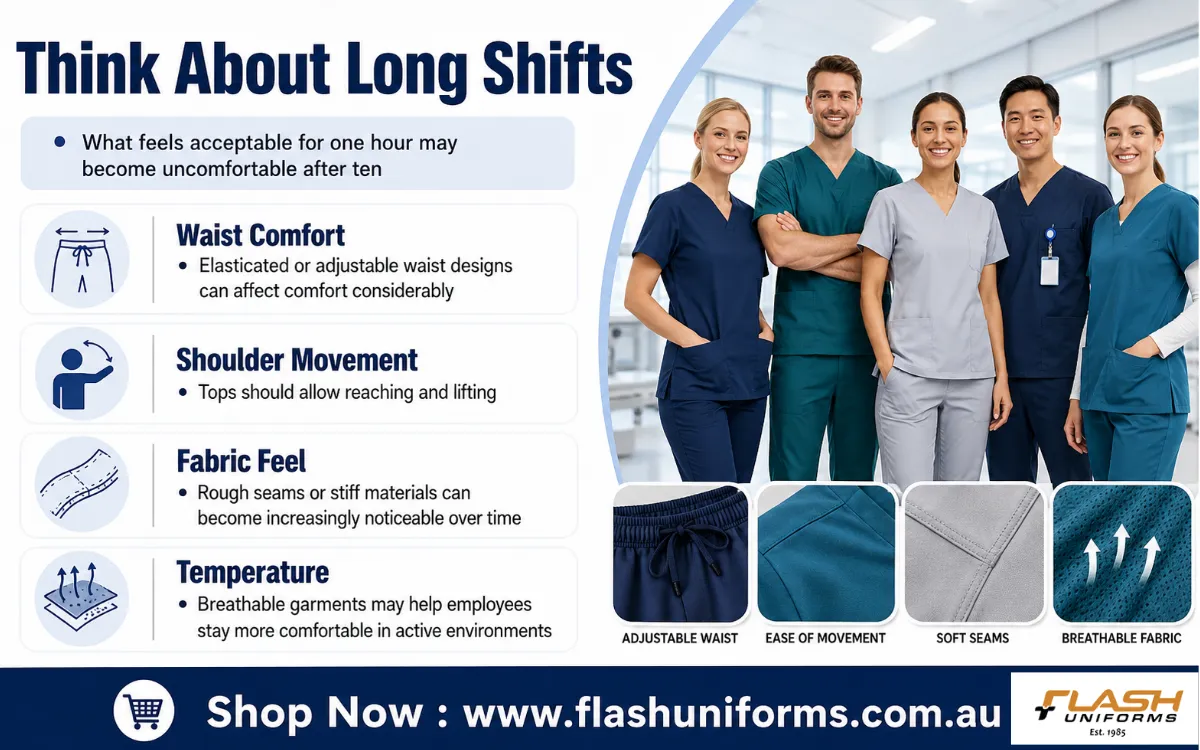
For longer shifts, evaluate:
Waist Comfort
Elasticated or adjustable waist designs can affect comfort considerably.
Shoulder Movement
Tops should allow reaching and lifting.
Fabric Feel
Rough seams or stiff materials can become increasingly noticeable over time.
Temperature
Breathable garments may help employees stay more comfortable in active environments.
Easy Care Is Essential
Healthcare clothing generally requires regular cleaning.
Garments should fit within the workplace’s laundering requirements.
Check care instructions before ordering.
If employees wash their own scrubs, easy-care fabrics can make the routine simpler.
Providing enough garments for rotation can also help ensure employees are not relying on one or two items throughout the week.
Add Layers for Cooler Conditions
Healthcare environments can sometimes feel cool, particularly during early or late shifts.
Approved layering garments can keep the team coordinated.
Options may include:
-
Scrub jackets
-
Lightweight jackets
-
Cardigans where suitable
-
Warm-up layers
The layer should allow free movement and be appropriate for the clinical environment.
Consider Branding Carefully
Some clinics choose to add a logo or organisation name to scrub tops.
This can help create a more recognisable staff appearance.
Keep the decoration practical and understated.
A small chest logo is often enough to identify the organisation without making the garment feel excessively promotional.
Include Employees in the Decision
Healthcare professionals understand the practical demands of their work.
Before making a large purchase, ask employees to trial shortlisted styles.
Ask about:
-
Fit
-
Stretch
-
Pockets
-
Heat
-
Waist comfort
-
Sleeve movement
-
Garment length
Their feedback can identify issues that are difficult to judge from a product description alone.
Create a Clear Replacement Process
Clinical clothing is frequently worn and washed.
Over time, garments may fade, become damaged or lose their shape.
Develop a simple replacement policy.
Employees should know how many garments they receive, when replacements are available and how to request a different size when necessary.
Why Choose Flash Uniforms?
Flash Uniforms provides healthcare teams and other Australian workplaces with access to a broad range of professional clothing brands and garment categories. Healthcare customers can explore scrub tops, pants and complementary clothing while considering different fits and styles for their employees. The availability of custom branding options can also help clinics create a coordinated identity across their team where appropriate.
Final Thoughts
Comfortable clinical clothing is about much more than choosing an attractive scrub colour.
Healthcare teams should consider fabric, mobility, fit, pocket placement, care requirements and the realities of long shifts.
Employees should also have enough choice to find garments that suit different body shapes while remaining within the organisation’s uniform standards.
When scrubs are selected around real clinical work, employees can focus less on their clothing and more on the people they are there to support.