

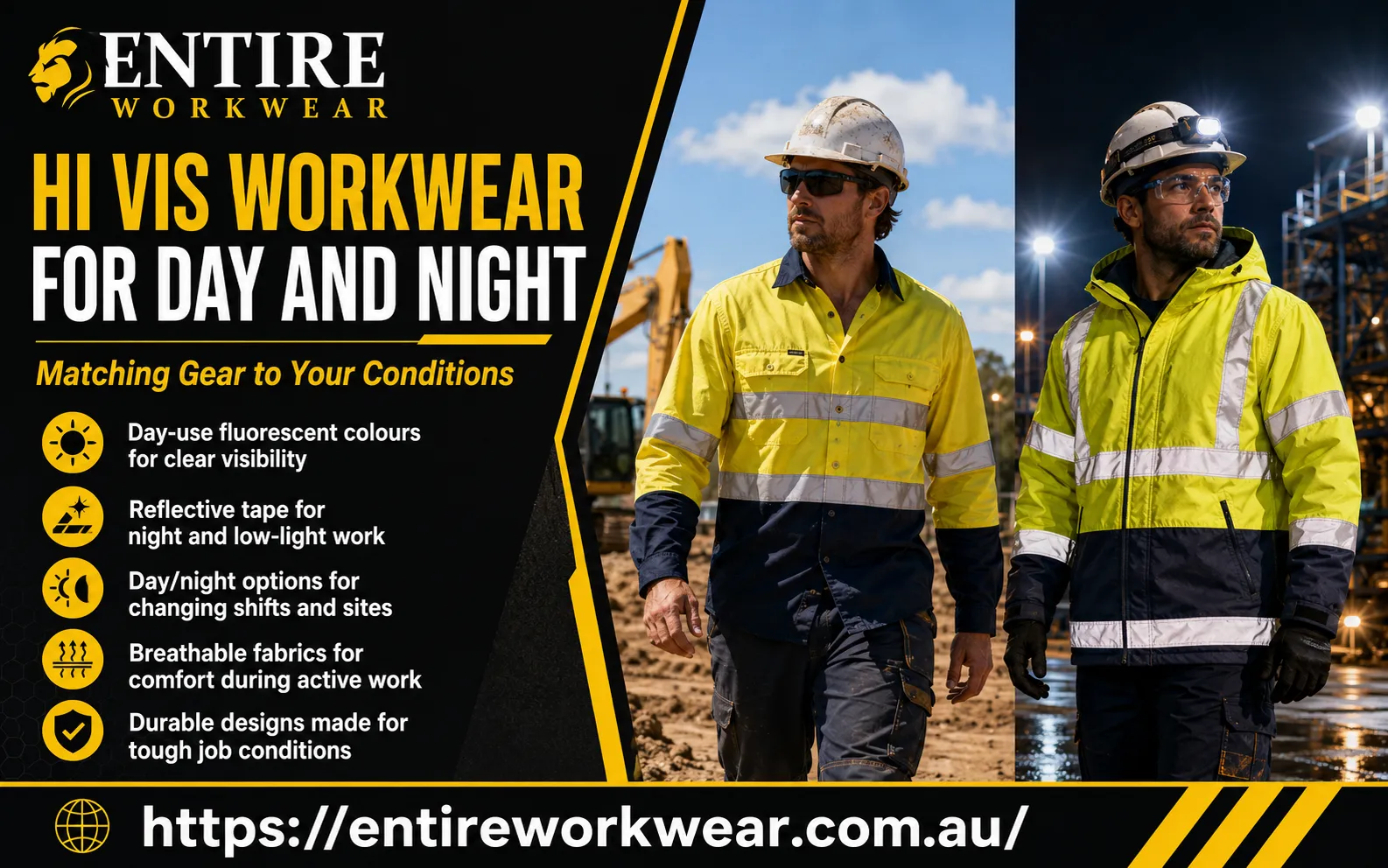
High-visibility clothing is not all the same. A worker on a roadside at dawn has different visibility needs from someone in a brightly lit warehouse. A night-shift crew working near vehicles needs different protection from a team working outdoors in full daylight. Choosing the right gear starts with understanding the environment, the light conditions, the weather, and the type of work being done.
For many Australian workplaces, hi vis workwear is a daily safety requirement, not just a uniform choice. It helps workers stand out, supports site safety, and can reduce the risk of accidents in areas where moving vehicles, equipment, machinery, or low-light conditions are present. The key is to match the garment to the actual conditions instead of assuming one option suits every job.
Why Visibility Conditions Matter
Visibility changes throughout the day. Morning glare, cloudy weather, shaded areas, warehouse lighting, headlights, dust, rain, and darkness can all affect how easily a worker is seen. High-visibility clothing should be selected with these conditions in mind.

In daylight, fluorescent colours are important because they help workers stand out from the background. In low-light or night conditions, reflective tape becomes essential because it reflects light from headlights, torches, and site lighting. In mixed conditions, a combination of bright colour and reflective detail is usually the most practical choice.
Day Visibility vs Night Visibility
The difference between day and night visibility is one of the most important things to understand. Bright colours such as yellow, orange, and lime are designed to be noticeable during daylight hours. They create contrast against roads, buildings, machinery, soil, and other common worksite backgrounds.
At night, colour alone is not enough. Without light, fluorescent fabric cannot provide the same level of visibility. Reflective tape helps solve this by bouncing light back toward its source, making workers easier to see when vehicle headlights or artificial lighting are present.
Workplaces should assess whether workers need day-only visibility, night visibility, or day/night protection. This decision should be based on the real conditions of the job, not just habit.
Choosing Gear for Varied Shifts
Many teams do not work under one simple condition. Construction, transport, traffic management, maintenance, mining support, logistics, and outdoor trade work may start early, continue into the evening, or take place in areas where lighting changes during the shift.
For these teams, high visibility workwear that combines fluorescent fabric and reflective tape can provide broader protection. It allows workers to remain visible in daylight and low-light conditions, reducing the need to constantly change garments as the day changes.
Good options may include:
- Hi-vis short-sleeve shirts for warm daytime work
- Long-sleeve hi-vis shirts for sun protection
- Hi-vis vests for quick layering over other clothing
- Reflective jackets for cooler or wet conditions
- Hi-vis hoodies for early morning or winter shifts
- Hi-vis pants or overalls for added coverage
- Rainwear for workers exposed to wet weather
Choosing the right mix helps workers stay visible and comfortable across different job types and seasons.
Comfort Is Part of Safety
Safety clothing only works properly when workers wear it correctly. If a garment is too hot, too stiff, badly fitted, or uncomfortable, workers may avoid wearing it, remove layers, or wear it in a way that reduces its effectiveness. That is why comfort should always be part of the buying decision.
In hot weather, breathable fabrics and practical designs help workers stay cooler. In cooler weather, layers allow workers to stay warm without covering reflective details. A hi-vis jacket, vest, or outer layer should remain visible when worn over other clothing. If the visible layer is hidden, the safety benefit is reduced.
Weather and Seasonal Factors
Weather can affect both visibility and comfort. Rain, fog, dust, and glare can make it harder to see workers clearly. Wet weather can also make clothing heavy and uncomfortable if it is not suited to the conditions. In summer, heat stress can become a concern, especially for outdoor workers wearing heavy or poorly ventilated clothing
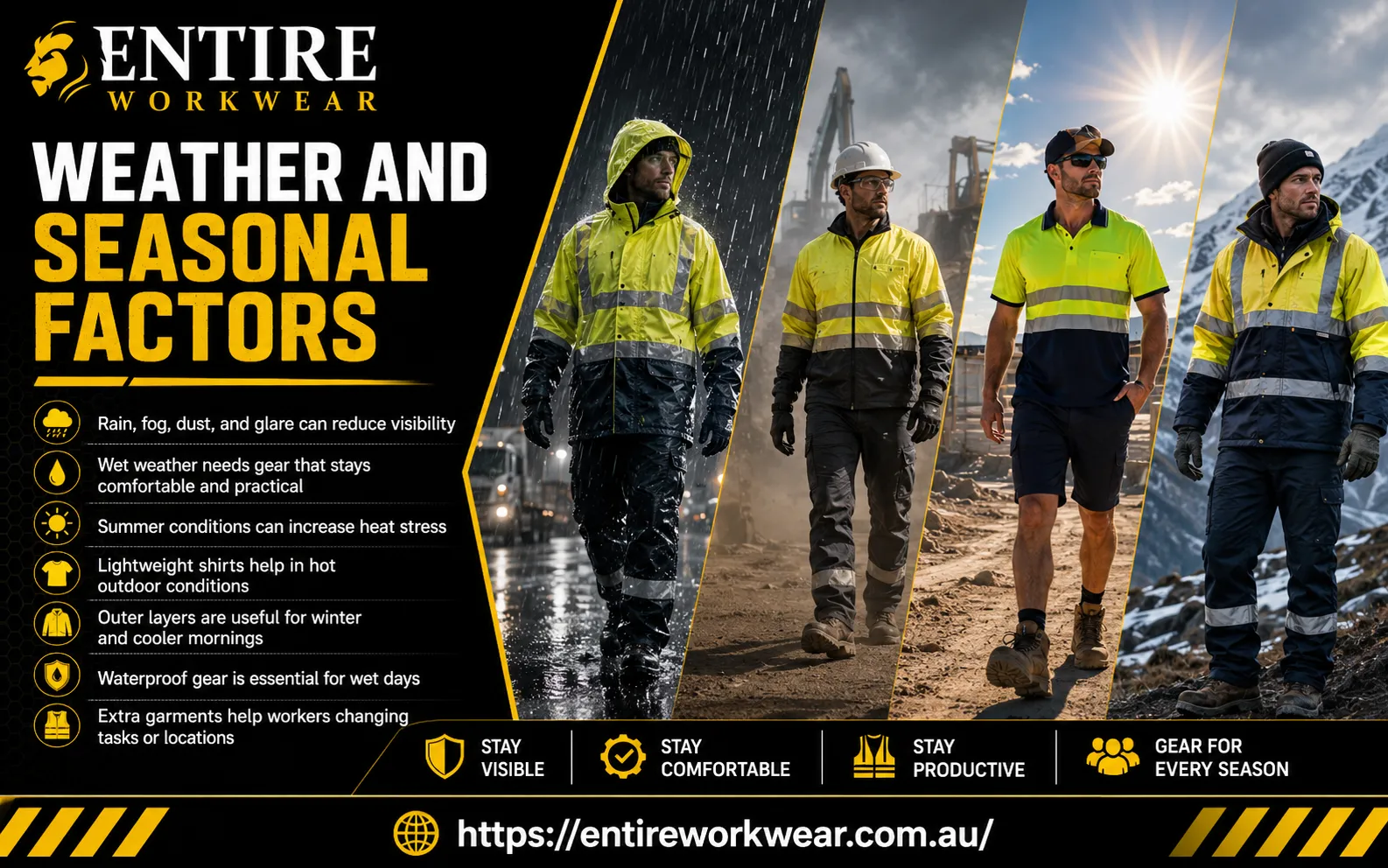
A practical high-visibility setup should consider the full year, not just one season. Businesses may need lightweight shirts for summer, outer layers for winter, waterproof gear for wet days, and extra garments for workers who change tasks or locations.
Maintaining Visibility Over Time
Buying quality gear is only the first step. High-visibility clothing must also be maintained properly. Over time, fluorescent colours can fade, reflective tape can crack or peel, and fabric can become stained or worn. When that happens, the garment may no longer provide the visibility workers need.
Follow the care instructions on each garment. Avoid harsh washing methods that may damage reflective tape or reduce colour brightness. Inspect clothing regularly and replace items that are faded, damaged, or no longer clearly visible. A worn-out hi-vis shirt may still look like workwear, but it may no longer perform as safety gear.
Compliance and Workplace Requirements
Many industries have specific requirements for high-visibility garments. Site rules, safety policies, and Australian standards may influence what workers need to wear. Employers should understand their obligations and choose garments that suit the relevant work environment.
A reliable supplier can help customers understand product features, garment types, and suitable use cases. Clear product information is important when buying online because customers need to know whether an item is intended for day use, night use, or both.
Buying for Teams
When buying for a team, consistency is important. Workers should have access to the right garments in the right sizes, and replacement gear should be easy to order when needed. A consistent range also helps businesses present a professional image while keeping safety practical.
It is worth creating a basic uniform system. For example, a business might choose one hi-vis shirt for summer, one long-sleeve option for outdoor work, one jacket for cooler months, and one vest for visitors or short-term site access. This makes ordering easier and reduces confusion.
Why Choose Entire Workwear
Entire Workwear offers high visibility options for workers, tradies, contractors, and businesses across a wide range of industries. Our range is designed to help customers match gear to real conditions, including daytime work, low-light environments, outdoor tasks, and changing weather.
We provide hi vis clothing, workwear, footwear, and accessories that support comfort, durability, and practical use. Whether you need a few garments for yourself or a complete setup for a team, we make it easier to order the right gear online.
Final Thoughts
Choosing hi vis clothing should never be treated as a box-ticking exercise. The right garment depends on when and where people work, how visible they need to be, what the weather is like, and how comfortable the clothing feels during a full shift. When you match gear to actual conditions, you give workers better protection and businesses better value.
Frequently Asked Questions
What is the difference between day and night hi-vis clothing?
Day hi-vis clothing uses bright fluorescent colours to improve visibility in daylight. Night hi-vis clothing relies on reflective elements that return light from headlights, torches, and site lighting.
Can one garment work for both day and night?
Some garments are designed for day/night use because they combine bright colour with reflective tape. These are practical for workers whose shifts or environments change.
Why does comfort matter in safety clothing?
If high-visibility clothing is uncomfortable, workers may avoid wearing it properly. Comfortable gear supports consistent use, which helps maintain safety.
When should hi-vis gear be replaced?
Replace hi-vis gear when colours fade, reflective tape is damaged, fabric is worn, or the garment is no longer clearly visible.